Going back, and going back, and going back...
Thai Lu and Robert Sember
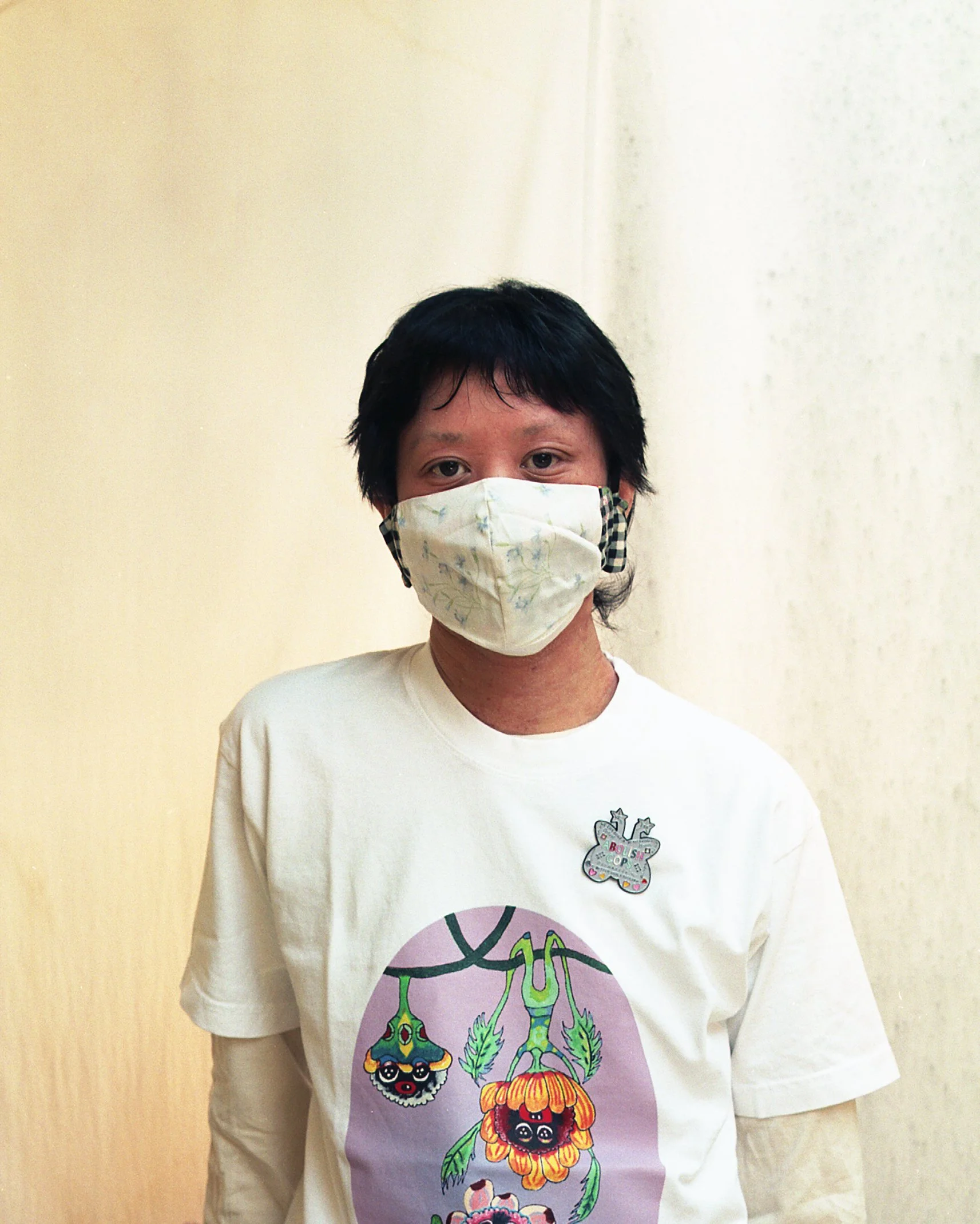
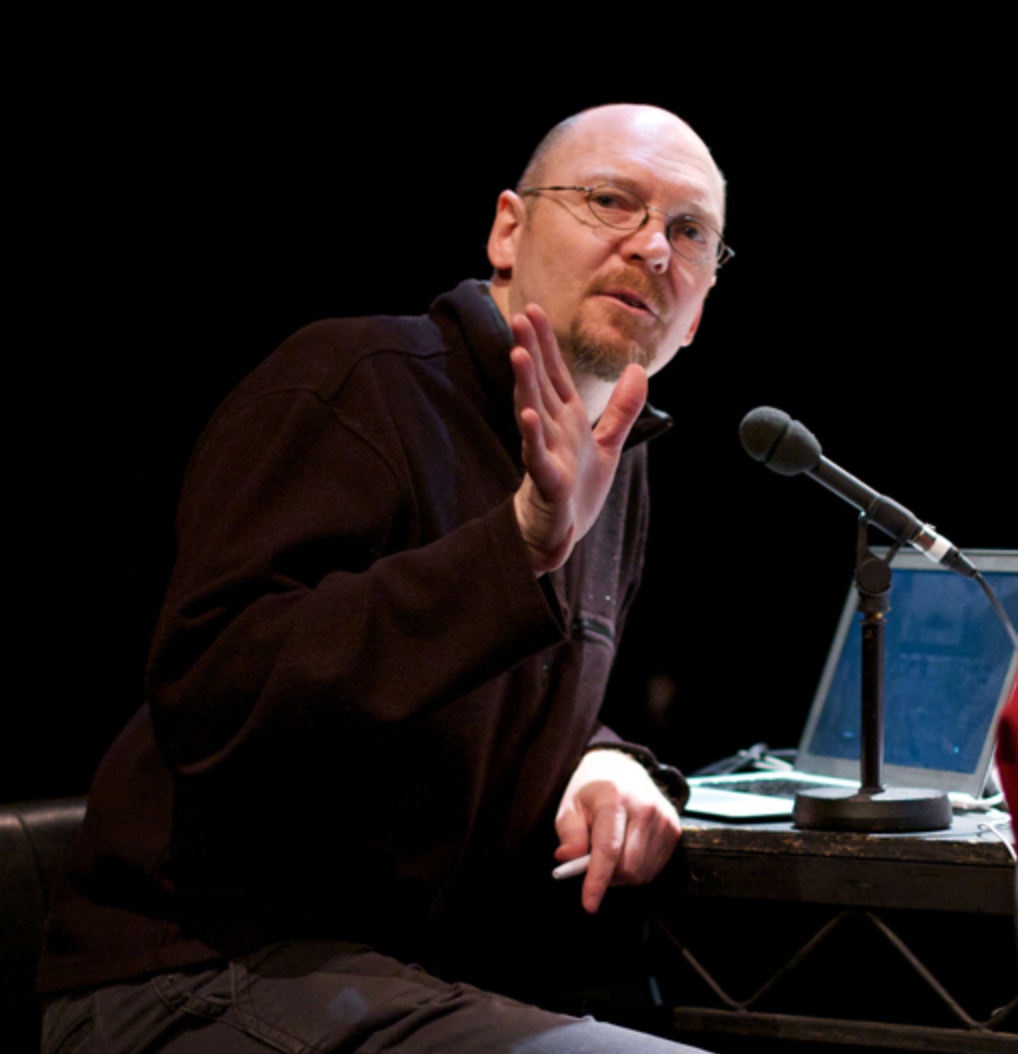
What were the first moments in which you first heard about and later started to pay attention to AIDS, HIV, and COVID 19 respectively? How did these diseases first come into your life in a way that made you realize this has something to do with you and your community?
Maybe you could start and I can build off of your thoughts?
I was still living in South Africa the first time I heard about HIV and AIDS. I was a young gay person. I had come out. I was beginning form a community. I was becoming sexually active. The rumors started to spread. I was going clubbing at the time. A lot. It was in the early '80s. The movements against the apartheid were very active. I was, you know, connected with those movements. There was a great deal of fear already in our daily lives around that kind of activism. But it was still very much illegal being queer at that time. [Queerness] was weaponized against any form of anti-government action. I felt that I and my queer community, but also the broader [anti-apartheid] movements, were in very precarious and dangerous positions.
Also, within the movements, issues of sexuality were not really welcomed. In many ways, we were told to be invisible, to keep quiet, to not be a distraction. Suddenly we started hearing about AIDS. It was early enough that we were hearing rumors of a “gay disease.” That pandemic arrived to me as one that was very intimate. It was very much about my story, the [gay] community, and some very sort of deep questions about the future of the country.
And then there was basically what happened was the AIDS epidemic in South Africa unfolded but it was really invisible. It was so eclipsed by the urgencies of the anti-apartheid struggle. When I left South Africa and arrived in the United States in late 1988, I discovered, sort of rediscovered, the epidemic but also an epidemic that was configured in a very different way for many reasons: the understanding of public health, the understanding of community and identity of sexual identity of gender. I [eventually] settled in New York City and became very directly involved in AIDS activism [in the United States and then other parts of the world].
Early in the COVID-19 pandemic, I had conversations with folks debating mask-wearing. I came up within the queer rights struggle of my generation (particularly around gay men). Those of us in the first decade of the AIDS crisis were on the ground trying to figure out how to live. This was before antiretrovirals. There was a lot of suffering and death on a daily basis. We came together and said, “We know how to do this. We know something about this.” We knew what it was like to shift behavior on a large scale in order to survive. Isn't it interesting to see how much crisis there is around wearing masks? Doesn't this remind us of when we debated wearing condoms or doing needle exchange? That’s a very vivid early memory of the COVID-19 pandemic, and how that and the AIDS crisis fold together in a very particular way for a particular group of people. Basically, we sort of knew we have been living in a pandemic state for 30 years.
I feel similarly. My autistic brain wants to recognize patterns—and this applies socially for me too. I hope I make sense today. But, I felt, um, very alone with these layered feelings [during the beginning of the COVID-19 pandemic]… sorry, I have so many thoughts coming to me, and they aren’t all sticking.
When did you first hear about COVID?
When I first heard about COVID, I was already struggling with coming to terms with my disability. I realized that I’ve had lifelong internalized ableism and [had been] denying my reality. A year before COVID, I had already become bed-bound from my illnesses. I felt really lonely and isolated. It felt sort of like a cruel joke… like, okay, now everyone is going to experience more isolation. And I felt some resentment that what I was experiencing would become normalized. Like I was—I wanted to say that I was already feeling these things [like isolation] and that nobody listened until it affected them personally. That’s been a pattern in my life.
So when COVID first started spreading, I was fundraising and advocating for a friend who could not access testing, despite having all the symptoms. I was already doing mutual aid and using the Internet as a way to circulate [resources]. When I first started talking publicly about my disabilities, there were not many people doing that… but I had nowhere else to be besides social media. I was grieving my former life, being on the ground, being in New York City, and going to protests.
I asked myself, “How could I continue to be of service from my bed?” I knew I was capable of helping. I have a background in design and there weren't people sharing graphics for mutual aid when I first started doing it. I just had the idea to make these visuals more engaging, and to maybe bring people into that conversation.
And then I noticed that more people started doing that too, seeing art as a tool for raising awareness for disabilities. So, yeah, when COVID first started, I was advocating for my friend. And then I gathered more friends who were sharing mutual aid as well. We came together to advocate for my friend to get testing and proper care. And we wanted to help more people in this way. We wanted to empower people to advocate for themselves and for each other. I was meeting so many sick and disabled and queer and trans and Black and Indigenous comrades online.
This connects back to my childhood. I came from a refugee family. Language was another barrier to care. When we were in medical spaces, I was over-prescribed steroids. My mom didn't have the language or education to make more informed decisions about my care. I was a child, a nonverbal child, and didn't feel I had the knowledge or words to advocate for myself. My family didn't have that access, and so how were we going to—how could I [as an adult] bring this kind of work back to my refugee community, when there is still such a huge language barrier?
When COVID began, that feeling of loneliness and isolation became kind of universal. I remember thinking to myself of the loneliness of being a young queer person. That solitary experience of registering things that my body was telling me about desire, about its aliveness, about enfleshment. But that language was so [quieted] by the counter-language of patriarchal normativity. The work of trying to listen differently and find a new poetry-of-self… that is one of the most important creative acts. I don't mean this in an expressive sense at all. I mean it in the sense of finding a world of belonging.
This is kind of a partner question to the one about when we first heard about HIV and AIDS respectively. When did we first feel that we belonged in some way—and that this feeling of belonging may have shifted at some point? I’m sort of assuming that for example, your feelings of belonging have shifted over the course of your life, or that they have expanded, or got reordered, reprioritized around racial and ethnic belonging, or a gender belonging, or even a belonging to a refugee community… and then arriving at the belonging of disability through those sorts of things. When did we arrive at that place of belonging?
This really interests me because, I know as a political person, as somebody who has experience around this conjunction of art and politics, that the making of belonging is incredibly important. Often when we think of art, the emphasis is on expression. Whereas in fact it’s the building of connection and community. When you immediately shift in your story from feeling alone to doing fundraising, to meeting other folks online, to entering into conversation, I want to define those as acts of creativity and acts of art-making, of self-making and world-making that are so crucial to any understanding of politics. I hope that makes sense...
Yeah. I really enjoy talking with you because everything makes sense. I feel seen and heard. That feeling is very hard to come by these days. But going back to that feeling of belonging, I started to feel that when I first moved to New York. After spending a decade there, I felt like there was more openness and acceptance for things that—well, characteristics that my mom would say, “You just always have to be different.” But, in New York, I felt like being different is okay. I was able to begin pulling my own autistic mask off.
There was also an internal [conflict regarding] my circle of friends in New York, and whether it reflected who I really felt like I was inside. I remember really struggling with this. There was clashing because I was still trying to diverge from internalized ableism. I lost all my friends. I lost them all. This happened multiple times in my life following abuse. And the way that connected, like online socially, to when I first became bed-bound, I realized that people were projecting [themselves onto] what I said online. I felt really alienated from my able-bodied friends.
There was a lot of misunderstanding of what my life was like. And I realized that my friends were only seeing what I shared online. But I felt like I had to be more honest about who I wanted to be, which meant that I had to start sharing what my life really is like, which meant sharing the ugly parts. That was also really liberating for me because I had felt silenced my whole life. So to have that outlet of expression was really powerful for me—I could hold on to some of my agency.
Thank you so much for all of that. It actually opens up so many memories and feelings in me. The journey you’ve just described reminds me so much of the things that I, and those who I’ve loved and lost, went through. When you reference the loss of your friends—and in a certain sense this experience of starting over again—it makes me think of how grieving becomes an opening. I don't mean this in a redemptive way at all, but out of just a kind of desperation.
In the first phase of the AIDS epidemic, as I experienced it, there were the gatherings around grieving. Then those gatherings transformed into statements of analysis and demand. They eventually became referred to as ‘political funerals’. I was very aware of such political funerals in South Africa. They have been so crucial to struggle. The refusal to allow death to silence and to cower.
When you were talking, I was reminded of the need to take risks and the need to step into fears. Part of what happened in the very first couple years of the AIDS crisis was that people disappeared into a sort of solitary fortresses of fear. I mean, literally, bodies were not going to touch bodies. There was a certain sense (amongst gay folk, but I also know this from talking with people who were using needles to inject and share drugs) that the contraction of HIV was a form of death. There needed to be a kind of grieving of that idea, and an acknowledgement that actually a rupture had occurred—to live was going to require a kind of new [social and political] formation. It was going to have to come from us. It wasn't going to come from them.
In order for that to happen, we sort of needed to have a bounded community. We needed to say that folks who were heterosexual were not living this crisis [with us]. We needed to be able to say, and with each other, that this is about the most intimate. I don't just mean sexual intimacy, but also what it means to inhabit a body with these desires in this moment, in this place, and with these other people.
The formation of community and the ability to speak truths to each other built a kind of—and this is not a word I love—courageousness. A sense of necessity to demand, and to begin to actually speak about our lives and figure out how we were going to make our lives visible and present in the civic sphere on our own terms. I think this is another part of the art-making of politics that is so crucial: it has to be collective, it has to connect, and has to tell stories.
I hope that as a result of those experiences, some of us at least cultivated a capacity to listen to the lives of other people, and began to open up our affiliations and solidarity. We struggle to make our experiences manifest and be meaningful to ourselves, and then to others. Other people are doing the same things. The disability community is such a critical example of this. I also think of the feminist struggle. Of the antiracist struggles. I think of these formations around justice that are at this meeting point of difference, and of deep solidarity and listening and hard work. The creativity that happens in these moments is an intentional opening to receive the stories and lives of other people. This to me is critically important. Often that means occupying space. Often it means claiming space, whether it is online or whether it’s in a physical room. But that claiming and framing space is an art practice.
Yes, thank you. I am really happy you brought up listening. As a young autistic kid, I often felt nonverbal. I felt like adults were using so many words and saying so little. I felt like so many people were not intentional with their words. I've always struggled with wanting people to listen. Not for them to just hear me, but to listen to me. People say so much while saying so little. I found this also in the disabled community with academics. In reading groups with academics, I felt like I have lived, and am living, what we’re reading about and discussing [abstractly]. It’s a privilege to be in [an academic] space and reflect on these things. Where are the people in this room who are living what we are talking about? To me those experiences really felt like a divide of classism and whiteness within disability spaces. I am usually one of the only people of color in the room in those spaces. That makes me really sad because I know that people of color are disproportionately affected by the things we talk about.
I would often bring up classism and the academics didn't want to hear it. They didn't want to make the material more accessible to me—and that again goes back to language. Because I have an intellectual disability, I need plain language along with the academic language in order to, yeah, open up my vocabulary.
But, I want to go back. You brought up political funerals. That's also something I feel like I've carried through my life. In Vietnamese culture, like many Asian cultures, there is a lot of importance around honoring the dead. There are very elaborate processes that we follow in my culture and it continues throughout your life. You commemorate this person's life forever. Every year, we make an altar and share a meal with their soul. For every dead person in your family, you would do this. I'm getting flashes from childhood of being from a family of refugees—we often visited the memorial. Every year we would take someone. My father passed away when I was in the womb.
That story is such an illustration that the dead are not dead. In a certain sense, the dead can speak to and for us. The cycles in your life are returning to that event—the loss of a father who you never knew. Out of that comes this deep critical understanding of... what I can only say is a denaturalizing of death. What were the conditions that led to his early death? Out of that, you were able to pull out so many crucial and critical questions that I would say are the foundation of a politics as well. I don't know if that's where you were going, but I think you have such a profound set of insights and practices, returning to the memory, of refusing to allow his death to be closed, by saying that there is a kind of justice guiding those returns on your part.
Yes, I'm always thinking about this. I’m always returning to childhood. Again, being nonverbal, I was often scolded in my family for not speaking. And I was hurting. I was hurting so much from not speaking. Not being able to speak openly about my grief for my father, who was in an accident and was in a coma for two weeks. Due to our poverty, my mother had to pull the plug because no one… there was so much pain in my family from surviving bombs, surviving war. And then making it to this side and then losing my father in that way? How could I not keep going back to that as a kid? I wanted to know him. I wanted to know who he was so I could know more about who I am. But no one in my family could talk about him. It was too painful. They even named me after him. My Vietnamese name is his Vietnamese name. My family couldn't call me by my Vietnamese name because it would bring up too much grief for them. I really wanted to talk about it. It would show up any time I wrote in school. It would come out in other ways but I had to find those answers myself. I would try to talk about grief and death as a kid. Of course, other children weren't on the same plane as me. So, again, it was very isolating to hold this grief and be silenced.
What are the conditions that determine who gets to talk? You know, to what ends? And who listens? I see a connection here with the point you made earlier about sitting in these intellectual groups. Folks are sort of talking in an academic language that is so limited and sort of closing. These are majority white and middle class groups. There’s privilege and affluence in these groups. And it makes me think of a basic guide that I and many of my comrades have: in this moment, are we talking about or are we talking with? And for talking with or being with to happen, people who are directly impacted need to be in the room.
One of the most important and impactful art practices in the early parts of the AIDS crisis was basically giving language [to this experience], and then using that language to give an analysis. I mean, the defining image of (at least the first phase in the United States, and it became international) the movement was “silence equals death.” That equation was so powerful and the way in which people could gather around it, it spoke so forcefully and directly to what people were actually living and experiencing. There were these remarkably elegant and piercing re-shapings of everyday language. I mean, the questioning of the notion of a general public that, in itself, is just… ordinary people… the sense that there’s a disability community and then there is the rest of the world, right? That the very rhetoric of the general public is that the general public at risk? It’s such a violent exclusion of otherness and of life. It really was language in the direction of death. It basically just silenced, negated, and decentered what was going on.
Thank you. Yeah. Going back to the political funerals, at the beginning of COVID, I remember thinking about these mourning rituals that I learned from my refugee community, and from my biological family. I thought about the scale, the rates of death, and the numbers, and how those numbers, the higher they got, the more invisible I felt the deaths were. I thought about the action I took in response, writing a piece about these mourning rituals and how this mass-disabling and death event took from people the opportunity to grieve. Like even just for risk of exposure or something, we couldn't – we couldn’t have these rituals that are part of our grieving process to honor the dead. Families couldn't be with their loved ones while they were dying. I wanted to talk about that. I didn't want it to get buried.
And going back to who’s not in the room, there is a very strong sense that the AIDS crisis is sort of over, or that it is no longer a crisis. There’s a very strong sense that we’ve been told this by the President of the United States that the COVID-19 pandemic is done. That rhetoric, that declaration, just completely erases so many vulnerable and oppressed communities. In the United States, the HIV infection rates and death rates among queer people of color is just alarming. But it’s so invisible. And it seems to always be sort of rediscovered by the institutions of public health and academics. But the practices of living and survival and education and loving and joyfulness and grieving? These happen in the communities living this reality.
Yeah, I’m thinking about when we first were advocating for my friend at the beginning of COVID. I think about our ancestors and transcestors and how they gave us the tools to know what we had to do. If they were silencing us, we had to find [another way], we reached out to journalists, we tried to find outlets to let this neglect be seen. We’re always thinking about the groundwork laid down by everyone who fought for before us. We wanted to build on top of that. Sometimes it feels like we’re building the plane as we’re flying it. If that's what you’re feeling, then you’re on the right track. This is all new and, like, I'm scared to fly it, but there’s no other option. I have to.
In an arts activist context, what do you think connects the actions around AIDS/HIV activism to those of COVID-19? A health crisis is a social crisis. Death and loss aren’t only existential experiences. These are foundational to how we gather as a society. They influence the decisions to remember and forget. To elevate or neglect. These projects were happening within the AIDS crisis and also within COVID. I also think about how art dis-aggregated in both pandemics. Artists really helped to focus on how the epidemic was playing out in different places. There’s not a flat homogeneity.
It exposed the vulnerabilities of inequality and racism, the cruel ironies of essential workers, and how these were enmeshed in class warfare. There is also the honoring of solidarities, community organizing, and the expertise of folks who are living with these struggles.
I don't know if I'm accurate about this, but I see the struggles around the AIDS crisis as having made certain things possible, as will the struggles around COVID. Similarly, the struggles of the AIDS crisis were made possible because of the civil rights movement, the women's movement, the decolonizing movements. That is just another form of what you have been so profoundly underscoring for us, which is the importance of going back, and going back, and going back, and re-narrating, and rethinking.
Thank you. Yes, reflecting the stories that have been shared with me [is important]. Trying to translate them into something that could help more people process feelings of isolation. This speaks to me because my practice, which is called Sensi-skins, is about having sensory processing disorders. All of these senses are so loud to me. What does disability arts activism feel like, look like, sound like? For me, disability arts is just... it’s just being a mirror. That’s what disability arts and activism embodies to me.
Totally. There is so much more to say. And we will say it on our own time with just such gratitude and humility. Thank you for bringing us together. I am so boundless in my gratitude for this opportunity.
It is mutual, yes.